
You probably haven’t thought much about your router lately.
It sits in the corner, blinking away quietly, doing its job. You set it up once — or someone set it up for you — and you’ve barely touched it since.
But the U.S. government just made it very relevant to your business.
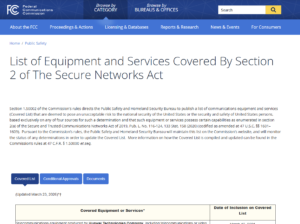
The FCC has added foreign-made routers to its national security “Covered List.”
That’s the official list of communications equipment the government deems an unacceptable risk to the United States. And as of March 23, 2026, any router manufactured in a foreign country is now on it.
This isn’t a small update. It’s one of the broadest additions to the list since it was created in 2021.
And if you’re a small or mid-sized business on Maryland’s Eastern Shore, there’s a good chance the router sitting in your office right now is exactly what they’re talking about.
So what’s actually going on?
Think of your router as the front door to your entire business network.
Every computer, every payment terminal, every phone call, every file — it all flows through that one device. If someone can get into your router, they can see everything happening inside your business.
For years, hacking groups linked to foreign governments — particularly China — have been quietly exploiting vulnerabilities in consumer-grade routers to access U.S. business and government networks. Groups with names like Volt Typhoon, Salt Typhoon, and Flax Typhoon have been doing exactly this.
The FCC’s response? Ban the import of any new router made overseas.
Which brands are we talking about?
This is where it gets real for local businesses.
Some of the most popular, widely-used router brands are manufactured overseas — meaning they fall under this ruling:
- TP-Link — a primary target of U.S. security agencies, already under investigation
- Netgear — manufactured overseas despite its familiar American feel
- Asus — foreign-produced hardware
- Linksys — foreign-made despite the household name
- Google Nest WiFi — produced overseas by Alphabet
- Amazon Eero — also foreign-manufactured
China alone controls roughly 60% of the consumer router market. So the affordable router most businesses grab off a shelf or order online is almost certainly one of these.
Does this mean you have to throw yours out today?
No. Not immediately.
Existing routers that are already installed can still be used. Pre-imported stock can still be sold. This isn’t a recall.
But here’s the issue: your replacement options are shrinking fast. As new imports are restricted, getting a like-for-like swap when your current router fails is going to become harder and more expensive.
And the underlying security risk? That doesn’t go away just because you’re allowed to keep using it.
Why does this matter more for small businesses than big ones?
Large corporations have dedicated IT security teams monitoring their networks around the clock. They run enterprise-grade hardware and have incident response plans in place.
Small businesses on the Eastern Shore usually don’t have that luxury.
That’s precisely why routers matter more, not less, at the SMB level. A compromised router in a small business can expose client data, financial records, internal communications, and even payment systems — often without anyone noticing until it’s too late.
What should you do now?
The good news is you don’t need to overhaul everything overnight. But you should start asking some basic questions:
- What router are you running? Know the brand and model.
- Where was it made? A quick search of the model number will usually tell you.
- How old is it? Older routers are more likely to have unpatched vulnerabilities.
- When did you last update the firmware? Most businesses never do this.
- Do you have a plan for when it fails?
If you’re not sure where to start, that’s completely normal. Most businesses haven’t had to think about this before. But with the FCC drawing a firm line in the sand, now is the right time to get a clear picture of what’s running on your network.
We help businesses across the Eastern Shore review their hardware, identify risks, and put the right equipment in place before small problems turn into expensive ones.
If you’d like to know whether your router is a concern — or just want a second opinion on your network setup — get in touch.